The Shupar Protocol
A Day of Trumpets study on watchmanship, acoustic awakening, and the Shupar protocol for the remnant.
ARTICLE 5.1: THE SHUPAR PROTOCOL
Series 5: Yum Taru’ah (The Day of Trumpets / Shouting) The Physics of the Ram’s Horn and the Watchman on the Wall
The arrival of the seventh month triggers a severe shift in the posture of the Qahal. The long summer wait is over. The command for the first day of the seventh month is not to celebrate a “New Year” in Babylon, but to execute a specific, jarring acoustic protocol: Yum Taru’ah (The Day of the Awakening Blast).
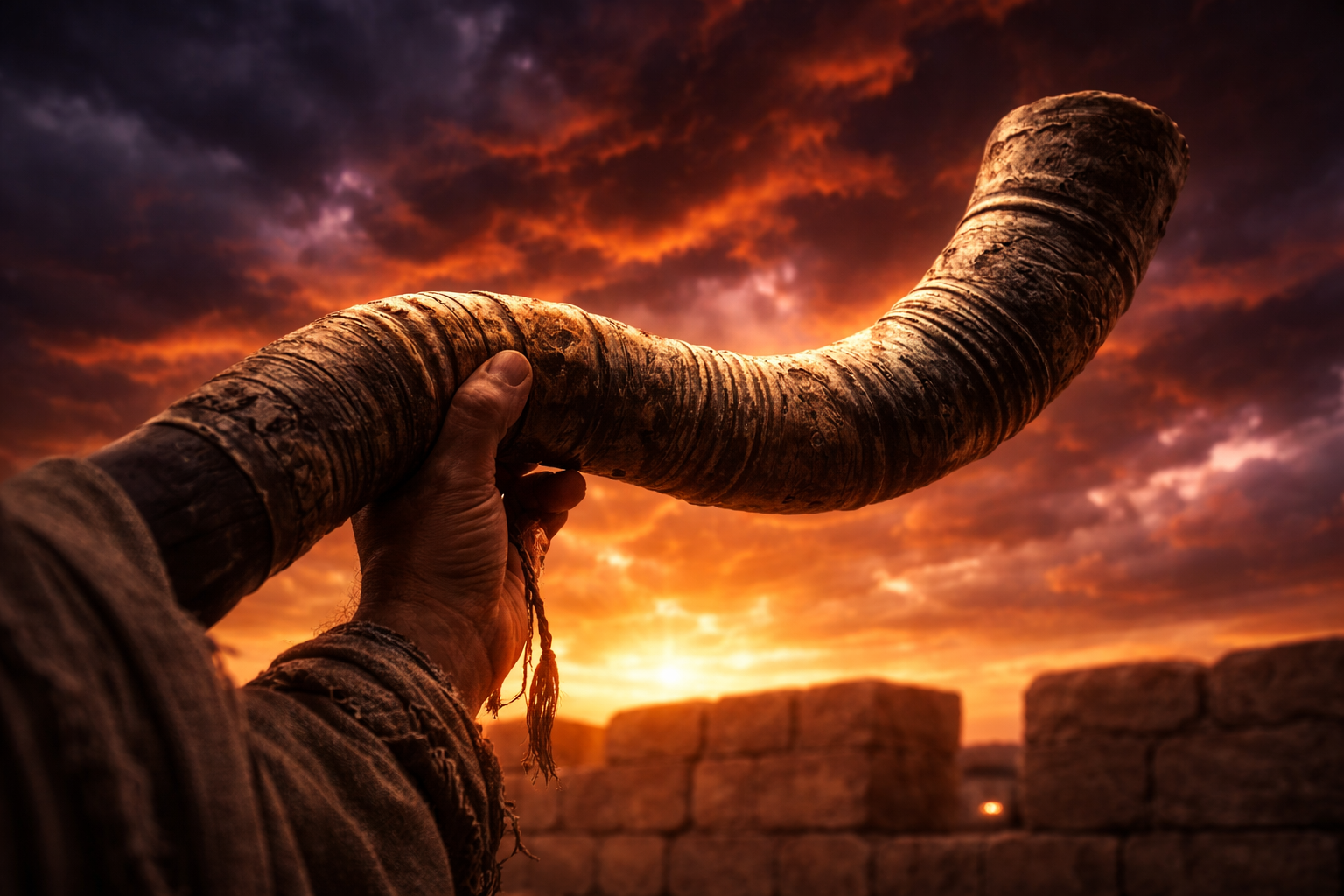
On this day, the remnant is commanded to utilize a specific biological instrument—the Shupar (ram’s horn)—to generate an acoustic shockwave. This protocol is designed to break the hypnotic frequency of the world, sever the spiritual slumber of the assembly, and announce the impending arrival of the King.
The Biology and Physics of the Shupar
Unlike the straight silver trumpets (chatzutzarut) which were forged by human hands for routine camp movement, the primary instrument of Yum Taru’ah is explicitly biological. The Shupar is extracted from a ram.
This requirement is deeply anchored in the foundational covenant of Abraham and Yitzchaq. When Abraham demonstrated absolute obedience on Mount Muriyah, 𐤉𐤄𐤅𐤄 provided a ram caught in a thicket by its horns to serve as the substitute sacrifice.
“And Abraham lifted up his eyes, and looked, and behold behind him a ram caught in a thicket by his horns: and Abraham went and took the ram, and offered him up for a burnt offering in the stead of his son.”
— Barashiyth (Genesis) 22:13
The Shupar represents the substitutionary sacrifice. Acoustically, the hollowed-out keratin cone acts as a natural biological amplifier. When the watchman forces his breath (his ruach) through the narrow opening, the spiral chamber compresses and accelerates the air, producing a raw, piercing, dissonant blast.
This specific acoustic frequency is directly tied to the unmediated presence of the Creator. At the Summer Transmission on Mount Siynay, the blast of the Shupar was the primary acoustic manifestation of the Kabad (Glory):
“And when the voice of the trumpet (Shupar) sounded long, and waxed louder and louder, Mushah spake, and Alahiym answered him by a voice.”
— Shamut (Exodus) 19:19
It is not a melodic instrument of entertainment; it is an instrument of warning, war, and divine authority.
The Mandate of the Watchman
In the physical infrastructure of ancient Yarushalayim, the watchman stood on the highest point of the wall. His duty was to scan the horizon while the city slept. If he saw an enemy approaching, he was legally and spiritually mandated to blow the Shupar.
“If when he seeth the sword come upon the land, he blow the trumpet (Shupar), and warn the people; Then whosoever heareth the sound of the trumpet, and taketh not warning; if the sword come, and take him away, his blood shall be upon his own head. He heard the sound of the trumpet, and took not warning; his blood shall be upon him. But he that taketh warning shall deliver his soul.”
— Yachazaq’al (Ezekiel) 33:3-5
If the watchman failed to blow the Shupar, the blood of the city was on his hands. Today, the Qahal functions as the collective watchman on the wall of the earth. We possess the internal architecture of the Turah and the Ruach HaQudash. We can see the chronological signs of the approaching judgment.
On Yum Taru’ah, it is our duty to sound the alarm, both physically through the horn and spiritually through the Saphah Barurah (Pure Lip). The prophet Yasha’yahu explicitly commands the remnant to turn their very vocal cords into the frequency of the Shupar to awaken the dormant:
“Cry aloud, spare not, lift up thy voice like a trumpet (Shupar), and shew my people their transgression, and the house of Ya’aqub their sins.”
— Yasha’yahu (Isaiah) 58:1
Shattering the Spiritual Slumber
The primary target of the Shupar’s frequency is the spiritual slumber of the remnant and the false security of Babylon.
During the long gap between the Summer Transmission (Chag HaShabu’ut) and the Fall, it is extremely easy for the Qahal to grow weary. The relentless, dissonant frequency of Matzrayim/Babylon wears down the Biological Mishkan. This condition of lethargy was perfectly described by Yahushua in the parable of the ten virgins:
“While the bridegroom tarried, they all slumbered and slept. And at midnight there was a cry made (Taru’ah), Behold, the bridegroom cometh; go ye out to meet him.”
— Matityahu (Matthew) 25:5-6
Yum Taru’ah is the “cry made at midnight.” When the Shupar is blown by the Qahal on the first day of the seventh month, it acts as a frequency jammer against the hypnotic lullaby of the world.
The prophets confirm that the great Day of 𐤉𐤄𐤅𐤄 is inextricably linked to this precise acoustic shockwave. It is a day of wrath against those resting in false security:
“The great day of 𐤉𐤄𐤅𐤄 is near, it is near, and hasteth greatly, even the voice of the day of 𐤉𐤄𐤅𐤄… A day of the trumpet (Shupar) and alarm (Taru’ah) against the fenced cities, and against the high towers.”
— Tzaphanyahu (Zephaniah) 1:14, 16
The piercing blast vibrates the physical eardrum and shocks the nervous system, commanding the believer to wake up, trim their lamps, and prepare their vessel for the severe holiness of the upcoming Day of Atonements (Yum Kipuriym).
The Earthly Observance of the Remnant
Because this day is a strict Miqra Qudash (Set-Apart Convocation), the Qahal must execute the following protocol:
-
Total Rest: The day is a Shabat. No servile work is to be done.
-
The Acoustic Blast: The assembly must hear the blowing of the Shupar. If the assembly is scattered, the head of the household must blow the horn. It is not a passive listening event; it is an active participation in the Taru’ah (the shouting/blasting). This physical blast guarantees a spiritual response from the Heavens in times of warfare:
“And if ye go to war in your land against the enemy that oppresseth you, then ye shall blow an alarm (Taru’ah) with the trumpets; and ye shall be remembered before 𐤉𐤄𐤅𐤄 your Alahiym, and ye shall be saved from your enemies.”
— Bamidbar (Numbers) 10:9
- The Shift in Posture: The Qahal transitions from the joyous, empowering state of the summer into a state of severe introspection and anticipation. The blast of the Shupar signals that the King has left His throne and is marching toward the terrestrial realm.
“Blow ye the trumpet (Shupar) in Tziyun, and sound an alarm in my holy mountain: let all the inhabitants of the land tremble: for the day of 𐤉𐤄𐤅𐤄 cometh, for it is nigh at hand.”
— Yahu’al (Joel) 2:1
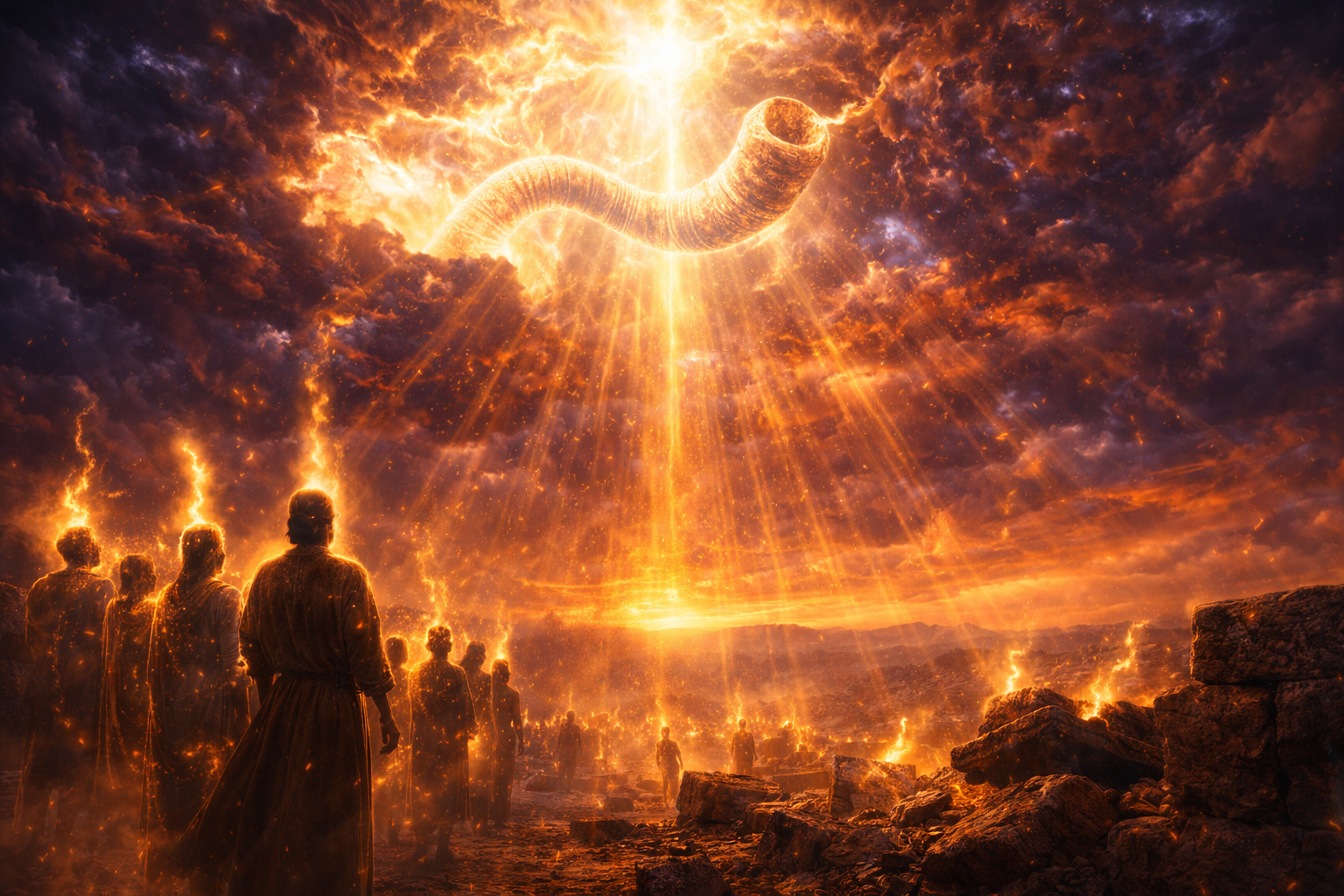
The earthly sounding of the Shupar by the remnant is a rehearsal. It is the terrestrial echo of the massive, impending cosmic blast that will soon shatter the heavens. The watchmen have blown the horn; the city is awake. We now look to the sky for the true, ultimate fulfillment of the acoustic alarm.
Study Path
Continue the Maw'adiym Path
Follow the next step in this appointed-time sequence through the linked Maw'adiym studies below. These connected articles help keep the full chronology, feast structure, and restoration flow together as one study path.