The First of the Harvest
A Firstfruits study on the barley harvest, the wave sheaf, and the timing of Bikuriym in the biblical calendar.
ARTICLE 3.1: THE FIRST OF THE HARVEST
Series 3: Bikuriym (The Day of Firstfruits) The Agricultural Mandate and the Chronological Coordinate of Abib 26
The Spring Intersections are inextricably linked to the biological cycles of the Earth. 𐤉𐤄𐤅𐤄 did not design His appointed times as abstract theological concepts; they are anchored to the soil, the sun, and the seed. Bikuriym (Firstfruits) is the precise coordinate where the agricultural year is officially activated.
Before the nation of Yashar’al could partake of the earth’s renewed bounty, a highly specific protocol had to be executed by the Kahan (Priest). The unblemished first of the harvest had to be presented and accepted in the Heavenly Haykal.
The Barley Harvest and the State of Abib
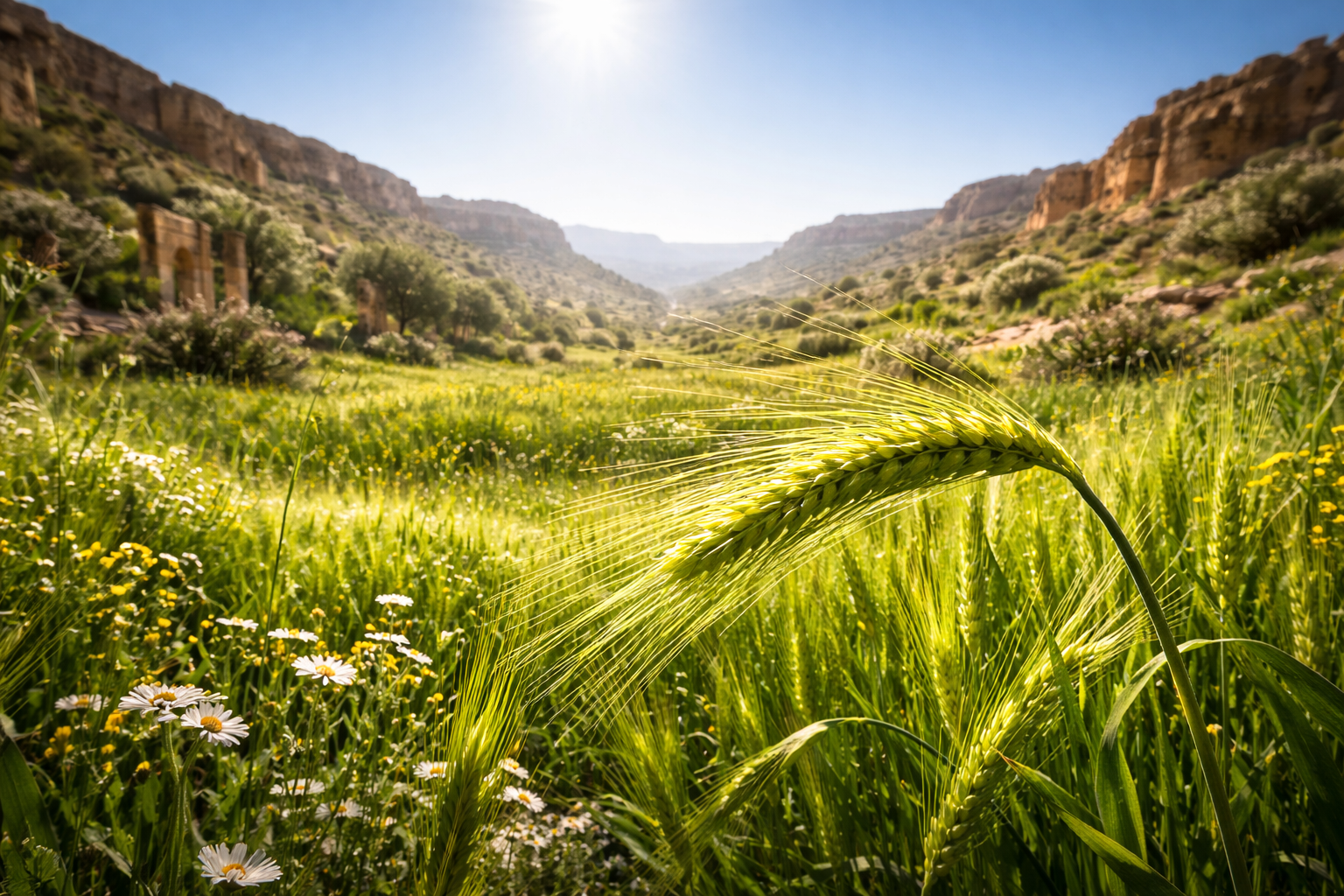
In the ancient Near East, barley is the first grain to mature in the spring. It ripens during the first month, surviving the harsh, dormant winter. In fact, the very name of the first month, Abib, is an agricultural term describing the exact developmental stage of the barley when the ear is formed but still soft and green.
The Turah explicitly records this agricultural condition during the plagues of Matzrayim, immediately preceding the first Pasach:
“And the flax and the barley was smitten: for the barley was in the ear (Abib), and the flax was bolled.”
— Shamut (Exodus) 9:31
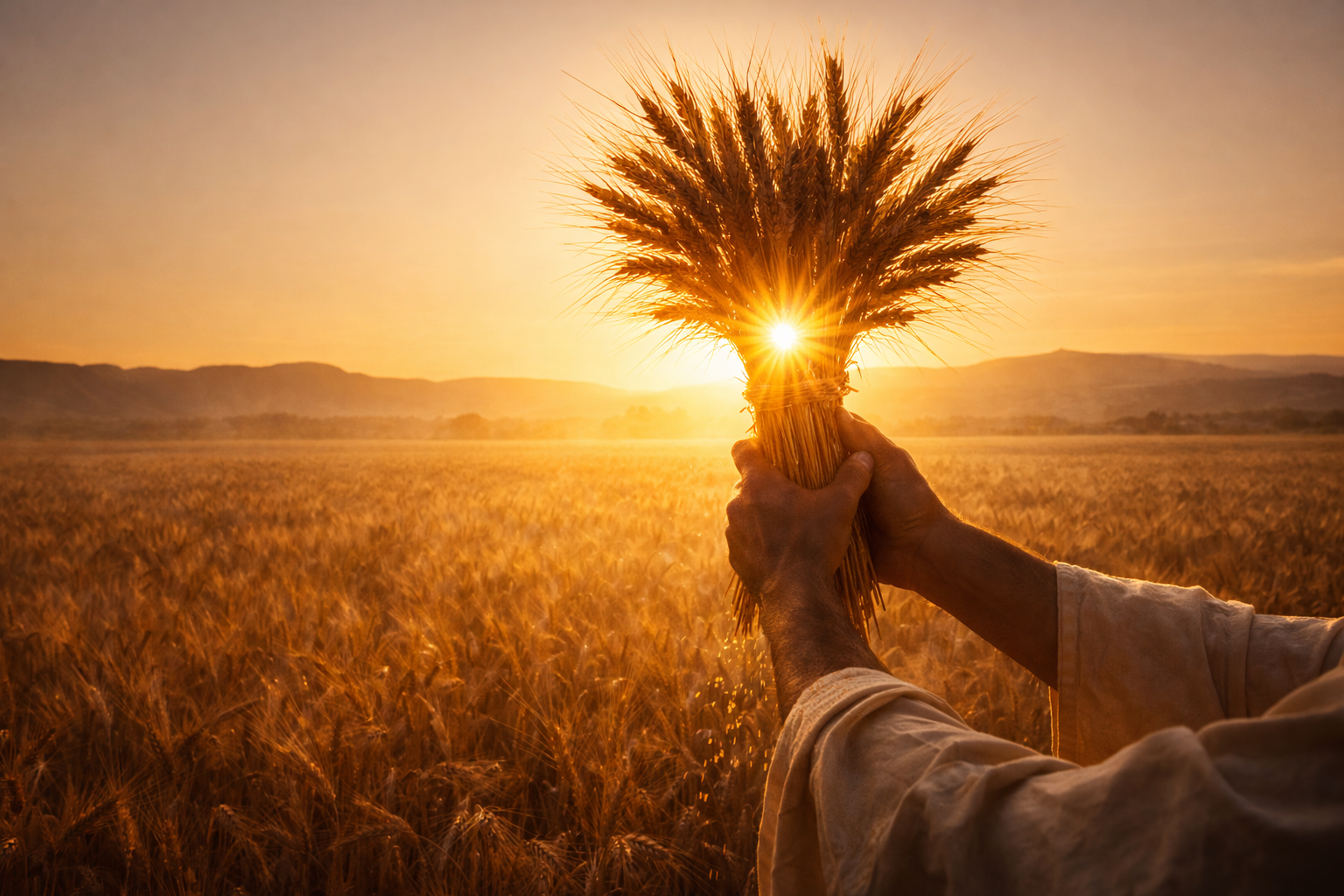
The Turah mandates that the very first, premier sheaf of this ripening barley must be harvested specifically for 𐤉𐤄𐤅𐤄.
“Speak unto the children of Yashar’al, and say unto them, When ye be come into the land which I give unto you, and shall reap the harvest thereof, then ye shall bring a sheaf of the firstfruits of your harvest unto the Kahan.”
— Wayiqra (Leviticus) 23:10
This single sheaf (an omer) represents the absolute best of the new life springing from the ground. The Kahan does not burn it on the altar as a sin offering; rather, he elevates it. He “waves” it before 𐤉𐤄𐤅𐤄. In the Qadamuni restoration framework, this “waving” is an act of presentation and frequency alignment—offering the purest biological sample of the earth back to the Creator.
The Bio-Legal Requirement of the Firstfruit
This presentation was not optional. It was a strict bio-legal prerequisite for the sustenance of the nation.
“And ye shall eat neither bread, nor parched corn, nor green ears, until the selfsame day that ye have brought an offering unto your Alahiym: it shall be a statute for ever throughout your generations in all your dwellings.”
— Wayiqra (Leviticus) 23:14
Until the Bikuriym offering was accepted in the Haykal (Temple), the entire spring harvest was essentially quarantined. The new grain could not be consumed, baked into bread, or roasted.
The physics of this law are profound: If the firstfruit is accepted as pure, the entire subsequent lump (the rest of the harvest) is legally declared pure and released for consumption. The single, perfect sheaf secures the blessing and the viability of the millions of stalks remaining in the field.
“For if the firstfruit be holy, the lump is also holy: and if the root be holy, so are the branches.”
— Rumiyiym (Romans) 11:16
This agricultural reality establishes the spiritual architecture for the Qahal. Just as the single sheaf secures the grain harvest, the Mashiach secures the human harvest.
“Of his own will begat he us with the word of truth, that we should be a kind of firstfruits of his creatures.”
— Ya’aqub (James) 1:18
The Tzadokite Chronometer: Abib 26
To ensure the offering is accepted, it must be presented at the exact appointed time. The Pharashiym (Pharisees) corrupted this timing, arguing that “the morrow after the Shabat” meant the day after the High Shabat of Chag HaMatzut (which would be the 16th of Abib). This artificial interpretation fractures the 50-day count to Shabu’ut.
The Tzadokite 364-day calendar restores the infallible mathematical perfection of this date.
“…on the morrow after the Shabat the Kahan shall wave it.”
— Wayiqra (Leviticus) 23:11b
The “Shabat” referenced here is the regular weekly seventh-day Shabat that immediately follows the conclusion of the seven-day Feast of Unleavened Bread.
-
Abib 21 (Tuesday): Chag HaMatzut concludes with the 7th Day Convocation.
-
Abib 25 (Saturday): The weekly Shabat.
-
Abib 26 (Sunday): The “morrow after the Shabat.” The First Day of the week.
Therefore, Bikuriym always falls precisely on Sunday, the 26th of Abib. It is locked into the architecture of time. It is the day the Sun rises on a new week. It is this exact, unmovable coordinate that activates the counting toward the summer transmission of the Ruach HaQudash.
“And ye shall count unto you from the morrow after the Shabat, from the day that ye brought the sheaf of the wave offering; seven Sabbaths shall be complete: Even unto the morrow after the seventh Sabbath shall ye number fifty days…”
— Wayiqra (Leviticus) 23:15-16
4. The Shadow of the True Seed
The cutting of the barley sheaf from the earth by the terrestrial Kahan on the morning of Abib 26 was a multi-millennial rehearsal. Every spring, as the priest elevated the golden grain toward the sun on the First Day of the week, the nation was watching a prophetic shadow play.
The earth was groaning, waiting for the true, uncorrupted Seed to break through the soil. The terrestrial harvest was merely pointing to the ultimate biological and spiritual harvest that would be initiated by the Mashiach.
“But now is Mashiach risen from the dead, and become the firstfruits of them that slept.”
— 1 Qurintiyiym (1 Corinthians) 15:20
Because he was the unblemished seed, planted during the purge of Chag HaMatzut, he broke the soil exactly on the morrow after the Shabat. The terrestrial wave sheaf was merely a precursor to the ultimate Bikuriym presenting himself before the Father.
Study Path
Continue the Maw'adiym Path
Follow the next step in this appointed-time sequence through the linked Maw'adiym studies below. These connected articles help keep the full chronology, feast structure, and restoration flow together as one study path.