The Blood in the Qudash HaQudashiym
A sanctuary study on blood behind the veil, heavenly intercession, and atonement in the true Haykal.
ARTICLE 6.2: THE BLOOD IN THE QUDASH HAQUDASHIYM
Series 6: Yum Kipuriym (The Day of Atonements) The Heavenly Intercession and the Malkiy-Tzadaq Protocol
On the 10th day of the seventh month, the earthly remnant is engaged in Anah (the affliction of the soul). However, while the Biological Mishkan is humbled through fasting, the ultimate focus of Yum Kipuriym shifts upward, beyond the visible terrestrial realm, into the very throne room of the Creator: the Qudash HaQudashiym (The Holy of Holies).
The fast prepares the vessel on earth, but the actual mechanism of atonement (Kipur) is executed entirely by the High Priest behind the veil.
The Terrestrial Shadow and the Lethal Perimeter
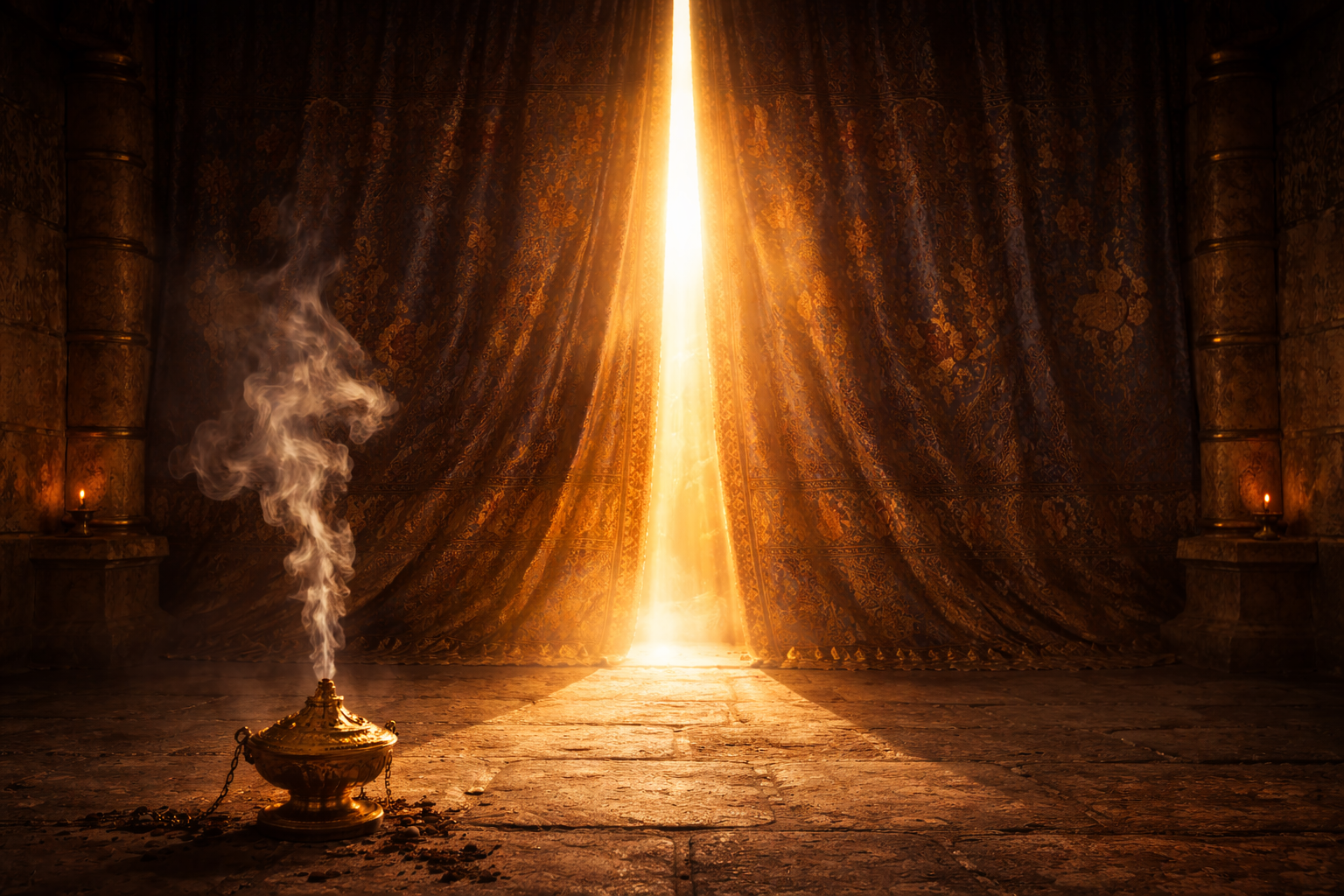
In the ancient, terrestrial architecture of the Turah, the Qudash HaQudashiym was a highly restricted, hyper-dimensional coordinate. It housed the Ark of the Covenant and the raw, unmediated presence of the Kabad (Glory). The disparity between the frequency of 𐤉𐤄𐤅𐤄 and the corrupted environment of the earth was so immense that access was legally barred 364 days a year.
Only on Yum Kipuriym was the Kahan HaGadal (High Priest) permitted to breach the heavy Parukat (veil), and he could only do so utilizing the precise frequency of unblemished blood.
“And 𐤉𐤄𐤅𐤄 said unto Mushah, Speak unto Aharun thy brother, that he come not at all times into the holy place within the vail before the mercy seat, which is upon the ark; that he die not: for I will appear in the cloud upon the mercy seat.”
— Wayiqra (Leviticus) 16:2
To enter without the blood of the bull and the goat, or without the proper preparation, resulted in immediate biophysical destruction (as seen with Nadab and Abihu). The blood was the legal and energetic currency required to “cover” the accumulated dissonance of the nation. The Turah mandated exactly how this blood was to be applied to neutralize the corruption of the camp:
“Then shall he kill the goat of the sin offering, that is for the people, and bring his blood within the vail… and sprinkle it upon the mercy seat, and before the mercy seat: And he shall make an atonement for the holy place, because of the uncleanness of the children of Yashar’al, and because of their transgressions in all their sins.”
— Wayiqra (Leviticus) 16:15-16a
This application secured another year of grace. However, this animal blood was a temporary shadow. It could merely “cover” the sin; it could not permanently eradicate the root of human corruption or alter the genetic degradation of Adam.
The True Haykal and the Eternal Kahan
The earthly temple in Yarushalayim, managed by the Lawiym (Levitical) priesthood, was merely a physical schematic of a greater, cosmic reality. When Yahushua was resurrected on Bikuriym, he bypassed this corrupted, terrestrial structure entirely.
Because Yahushua was from the tribe of Yahudah, not Lawiy, he operated under a far more ancient and superior priesthood established by the direct oath of 𐤉𐤄𐤅𐤄:
”𐤉𐤄𐤅𐤄 hath sworn, and will not repent, Thou art a priest for ever after the order of Malkiy-Tzadaq.”
— Tahiliym (Psalm) 110:4
As the ultimate High Priest of the eternal Malkiy-Tzadaq order, he ascended directly into the Heavenly Haykal.
“For Mashiach is not entered into the holy places made with hands, which are the figures of the true; but into heaven itself, now to appear in the presence of Alahiym for us.”
— Ibriyiym (Hebrews) 9:24
On Yum Kipuriym, we recognize that the true mechanism of our atonement is not dependent on the actions of mortal men, rabbinic traditions, or the existence of a physical stone temple. The true atonement was secured when Yahushua pierced the cosmic veil, carrying his own unblemished blood.
“But Mashiach being come an high priest of good things to come, by a greater and more perfect tabernacle, not made with hands, that is to say, not of this building; Neither by the blood of goats and calves, but by his own blood he entered in once into the holy place, having obtained eternal redemption for us.”
— Ibriyiym (Hebrews) 9:11-12
The Physics of Kipur and the Incorruptible Blood
The archaic term Kipur (Atonement) signifies a “covering” or a reconciliation of frequencies. Over the course of the prophetic year, the Qahal accumulates spiritual “dust” from walking in Babylon. If left unaddressed, this dissonance would legally fracture the covenant and separate the assembly from 𐤉𐤄𐤅𐤄.
The emissaries clearly understood the biophysics of this covering. They contrasted the dense, temporary blood of animals with the high-frequency, uncorrupted blood of the Mashiach. If animal blood could purify the external flesh, the blood of Yahushua is powerful enough to penetrate and recalibrate the internal consciousness of the believer:
“For if the blood of bulls and of goats, and the ashes of an heifer sprinkling the unclean, sanctifieth to the purifying of the flesh: How much more shall the blood of Mashiach, who through the eternal Spirit offered himself without spot to Alahiym, purge your conscience from dead works to serve the living Alahiym?”
— Ibriyiym (Hebrews) 9:13-14
Because the blood of Yahushua is fundamentally incorruptible, it acts as the ultimate energetic neutralizer. It does not need to be shed year after year.
“Forasmuch as ye know that ye were not redeemed with corruptible things, as silver and gold, from your vain conversation received by tradition from your fathers; But with the precious blood of Mashiach, as of a lamb without blemish and without spot.”
— 1 Kaphah (1 Peter) 1:18-19
When applied to the Heavenly altar, this unblemished blood completely absorbs and nullifies the legal demands of death and transgression that were hovering over the Qahal.
“Having therefore, brethren, boldness to enter into the holiest by the blood of Yahushua, By a new and living way, which he hath consecrated for us, through the veil, that is to say, his flesh; And having an high priest over the house of Alahiym…”
— Ibriyiym (Hebrews) 10:19-21
The Continuous Intercession and the Anchor Behind the Veil
During the 24 hours of the Yum Kipuriym fast, the Qahal physically aligns with this reality. We cease all worldly labor because we recognize that we cannot generate our own Kipur. We sit in a state of suspended animation, our biological processes humbled, knowing that our survival depends entirely on the Man inside the Qudash HaQudashiym.
Unlike the earthly Kahan HaGadal who had to exit the Holy of Holies immediately lest he die, Yahushua remains in the presence of the Father, actively maintaining the frequency of our redemption.
“But this man, because he continueth ever, hath an unchangeable priesthood. Wherefore he is able also to save them to the uttermost that come unto Alahiym by him, seeing he ever liveth to make intercession for them.”
— Ibriyiym (Hebrews) 7:24-25
The emissary Sha’ul perfectly summarized this profound dependency, defining his intercession as the immovable anchor of the Qahal:
“That by two immutable things, in which it was impossible for Alahiym to lie, we might have a strong consolation, who have fled for refuge to lay hold upon the hope set before us: Which hope we have as an anchor of the soul, both sure and stedfast, and which entereth into that within the veil; Whither the forerunner is for us entered, even Yahushua, made an high priest for ever after the order of Malkiy-Tzadaq.”
— Ibriyiym (Hebrews) 6:18-20
As long as the High Priest stands before the Father on our behalf, the covenant remains secure. The blood has been accepted. The Kabad is satisfied. We endure the affliction of the soul on earth because our anchor holds firm behind the veil in the Heavens.
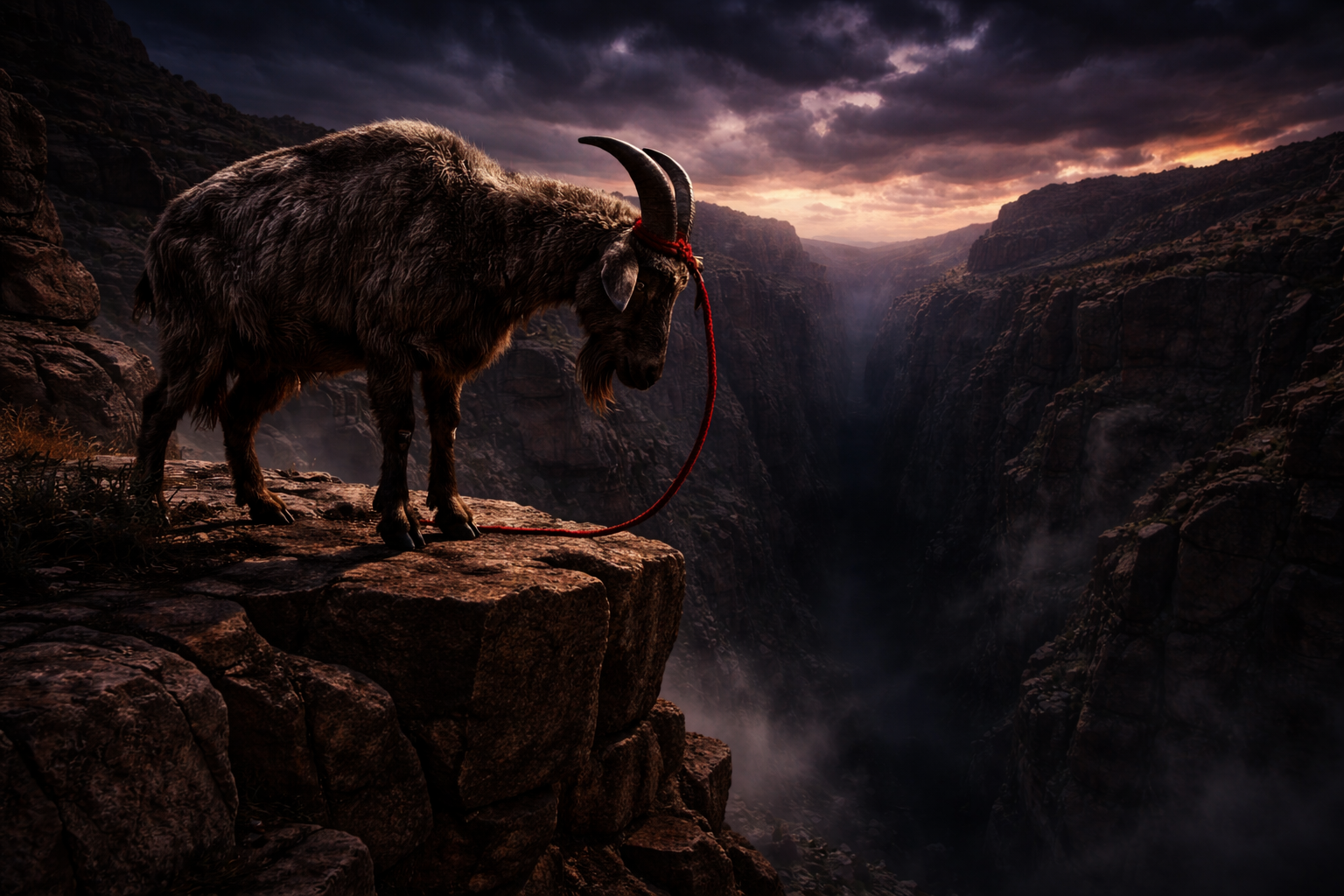
The covering is complete. But the process of Yum Kipuriym has one final, severe requirement. The accumulated transgression of the year must now be physically and judicially removed from the camp entirely.
Study Path
Continue the Maw'adiym Path
Follow the next step in this appointed-time sequence through the linked Maw'adiym studies below. These connected articles help keep the full chronology, feast structure, and restoration flow together as one study path.